
The Drums of War are sounding loudly. It’s time to sing a different tune.
By Scott Ritter
Editor’s Note: Scott Ritter was among the few experts who warned us – prior to the disastrous Iraq war – that Iraq did not possess weapons of mass destruction. He was correct and had he been listened to, we might have avoided that war. Now he warns us again. His record compels our attention. – Ed.
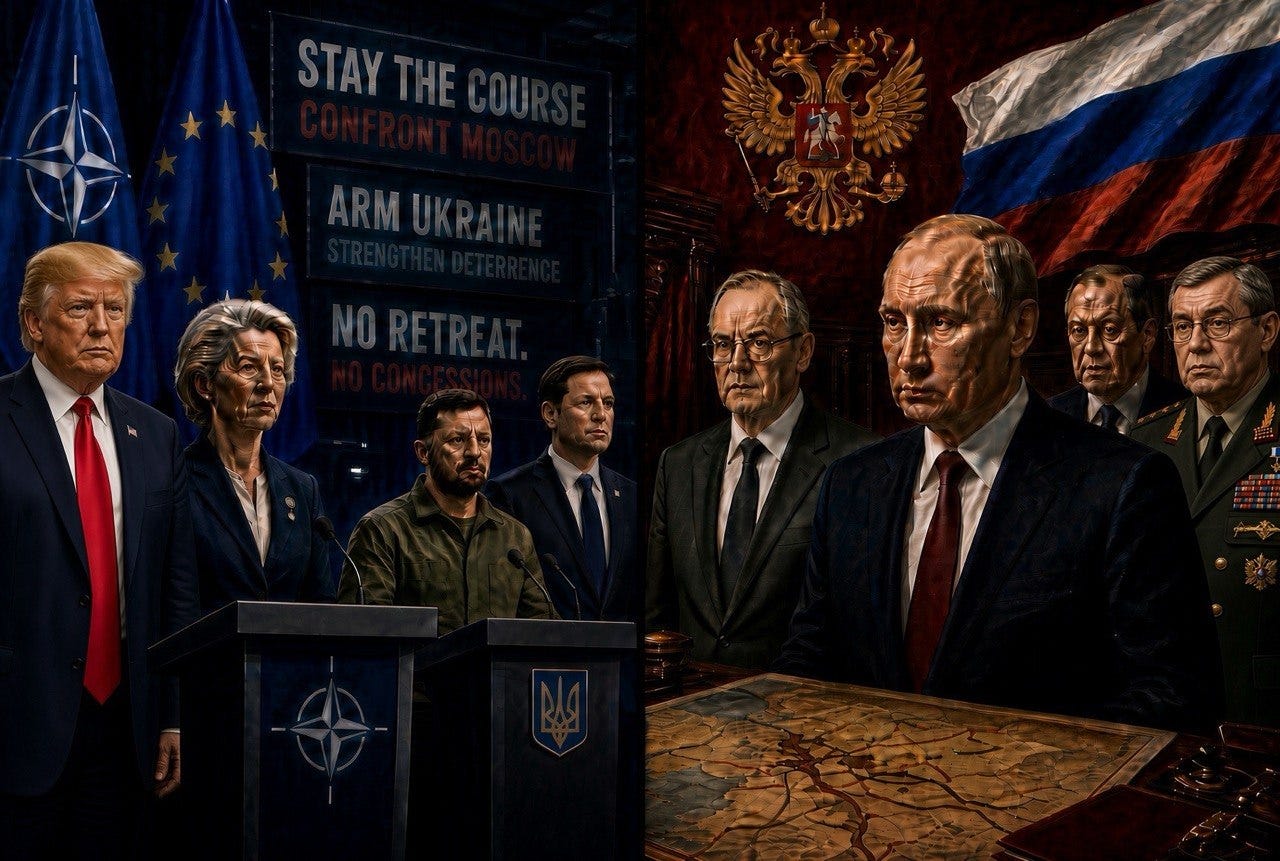
“All we are saying is give peace a chance.”
These words, sung by John Lennon and the Plastic Ono Band, have resonated throughout the decades as a mantra embraced by well-meaning people around the world.
The question remains, however: are we serious about actually giving peace a chance, or are we simply going to give lip service to a cause while being frog-marched by the powers that be toward a destiny we all can see, but refuse to acknowledge?
Today the world is singularly focused on the ongoing conflict between Russia and Ukraine as the most likely trigger for a future conflict between NATO and Russia.
But this most likely is not the case—the Ukraine conflict is in its waning moments, with a Russian victory all but assured.
Instead, the probable source of geopolitical ignition will come from a crisis that emerges in the Baltics and/or the Arctic regions, where a chastened Europe desperately looks for redemption by assuming a very aggressive posture against a Russian threat that, in terms of aggressive intent, simply does not exist.
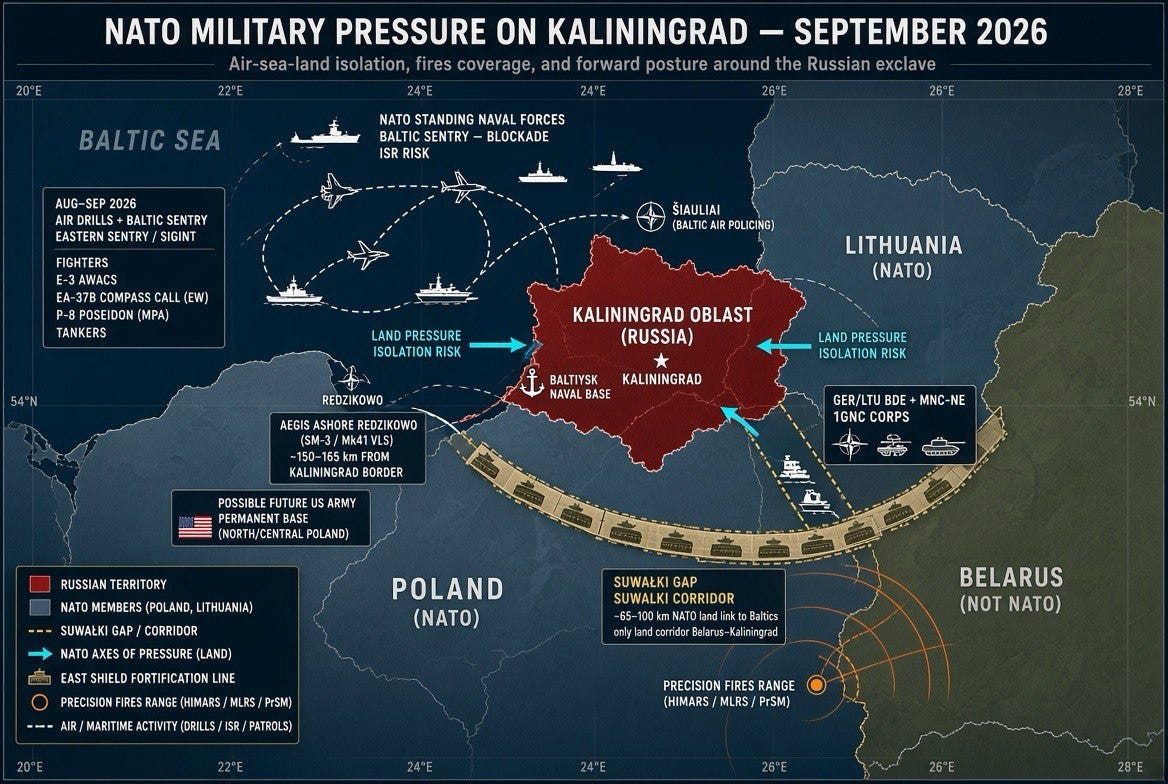
The rhetoric coming from Poland, the Baltics, and other NATO members about the Russian territory of Kaliningrad is particularly worrisome. The security situation surrounding Kaliningrad has intensified lately as relations between Russia and NATO worsen. Comments by NATO military and political leaders suggesting the viability of war as an option for containing what is perceived in the West as Russian aggression toward Ukraine and Europe have transformed the Baltics from a backwater to a frontline region.
Back in July of this year the former commander of US forces in Europe, General Chris Donahue, declared that NATO forces could capture Russia’s heavily fortified Kaliningrad Oblast “in a timeframe that is unheard of” if necessary.
In August US-led NATO air exercise consisting of a large number of allied aircraft flew combat-strike, tanker, airborne-radar and electronic-warfare missions along the alliance’s northeastern flank, some of it right up against Kaliningrad.
Polish Foreign Minister Radosław Sikorski recently argued that NATO should conduct aggressive military exercises near Russia’s Kaliningrad exclave to exploit Moscow’s localized vulnerabilities and force Vladimir Putin to redeploy troops away from Ukraine. Sikorski noted that Kaliningrad currently holds “practically no troops” because the Kremlin assumes NATO will not act, suggesting decisive allied maneuvers would inject strategic ambiguity.
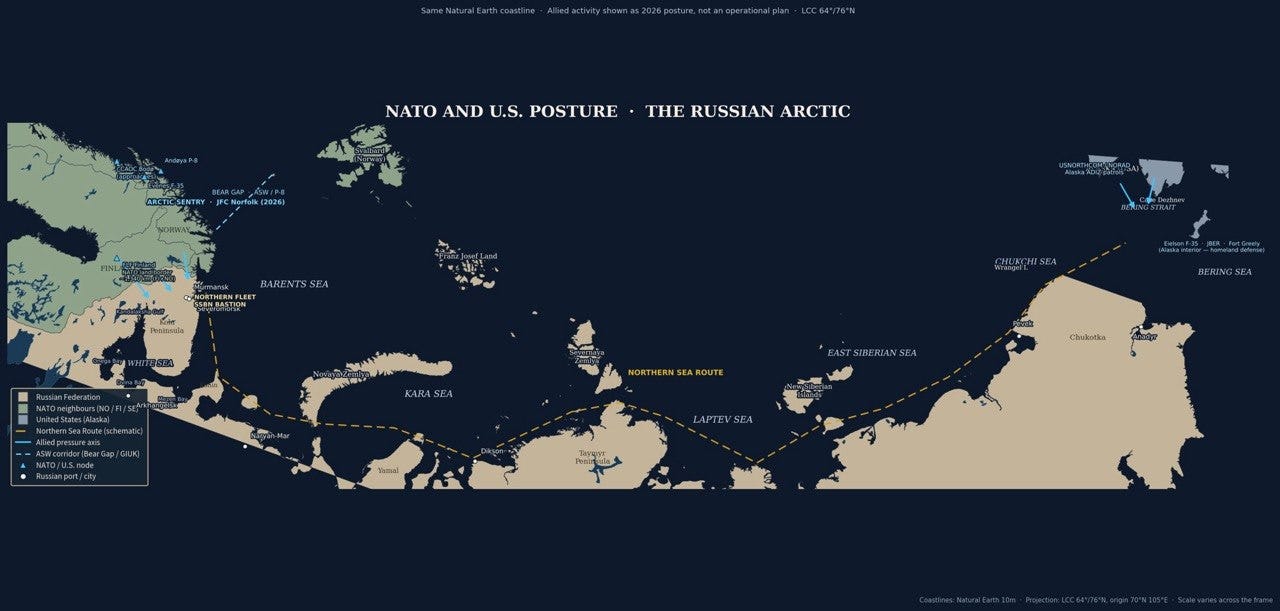
Likewise, the Arctic has emerged as a region possessing immense economic and geopolitical importance, and as such has led to a reformulation of policy on the part of the United States and Europe which seeks to aggressively challenge Russia in the Arctic and its periphery.
On September 14, 12 European nations gathered in Finland as part of a “European Arctic Summit”, where they collectively determined that Russia poses a long-term threat to European security that requires greater cooperation and investment in the Arctic.
“We note with serious concern the significant and long-term threat Russia poses to Euro-Atlantic security,” the collective noted in a declaration released at the conclusion of the summit.
“Russia’s ambitions to increase its influence in the Arctic, combined with its hostility towards Europe, including the increase in hybrid activities highlight the need to strengthen the EU’s Arctic policy,” the declaration stated.
Russia’s war in Ukraine, China’s growing security interest in the region and the accelerating effects of climate change are reshaping the Arctic, requiring the EU to take a more proactive role, the assembled nations concluded.
But the fact is Russia poses no such threat.
The Europeans are creating crises and conflict potential out of thin air.
What is missing from this discussion is a Russian perspective.
I am embarking on a two-week journey to Russia with the singular purpose of trying to capture the Russian perspective and bring it back so it can be clearly articulated to a Western audience that is not only ignorant about the Russian reality, but largely immune to reason given the level of Russophobia that currently exists in the US and Europe.
The situation today is eerily reminiscent of the months leading up to August 1914 and the outbreak of the First World War, where military posturing by European nations took place in a vacuum, ignorant of the causal effect various decisions regarding mobilization had on creating the conditions where a war no one wanted became inevitable.
We face a a similar scenario today, where European leaders allow their rhetoric to generate actions which, if left unabated, will lead to Russian reactions that will inevitably lead to a war.
But this time the war will include nuclear weapons.
At that means the end of humanity.
So the question confronting us all is this: are we able and willing to give peace a chance?
I will strive to gather the information necessary for educated people to make informed decisions about the true state of play when it comes to Baltic and Arctic security.
The real question is, what will those who have access to this information do to hold their respective leadership accountable for actions being taken in their name?
This is a joint responsibility.
I leave today to do my part.
Are you prepared to do yours?
About Scott Ritter: This trip, as with all of my work in Russia, is made possible only through the donations provided by supporters of independent media. This work is ongoing, and the need for continued support through donations does not abate. I have a follow-on visit to Russia planned for November, and another planned for January of next year. As you follow my reporting during this visit, please consider whether this is the kind of work you feel is important for the cause of peace and, if so, help this work continue by donating. I thank everyone who has made this current trip possible through their generosity, and I look forward to providing you with the information you expect from projects and trips such as this. This is what truly independent journalism is all about.
This article was sent by Scott Ritter to The PeaceWorker on Sept. 27, 2026; it was published by Scott Ritter at his substack.com on Sept. 22, 2026.